
WELCOME BONUS 300%
UP TO €2000 + 100
FREE SPINS
UP TO €2000 + 100
FREE SPINS
Home → Blackjack
Blackjack at Slotexo Casino: Variants, Rules and Payouts
Place Side Bet before cards are dealt
Lightning Blackjack by Evolution allows players to place side bets with stakes ranging from 1 to 2,500 EUR before the initial deal. This structure supports unlimited participants at the table while offering Lightning Multipliers that can reach up to 25x on winning hands. The high multiplier potential significantly increases the variance compared to standard live dealer games, rewarding early strategic placement of wagers.
Infinite Blackjack also permits side bet placement prior to dealing, featuring four distinct options including Any Pair and Bust It. Players can wager between 1 and 5,000 EUR, benefiting from a house edge of only 0.46% when using basic strategy on the main game. The availability of multiple side bets adds layers of complexity to the payout speed analysis, as these wagers settle immediately upon hand resolution.
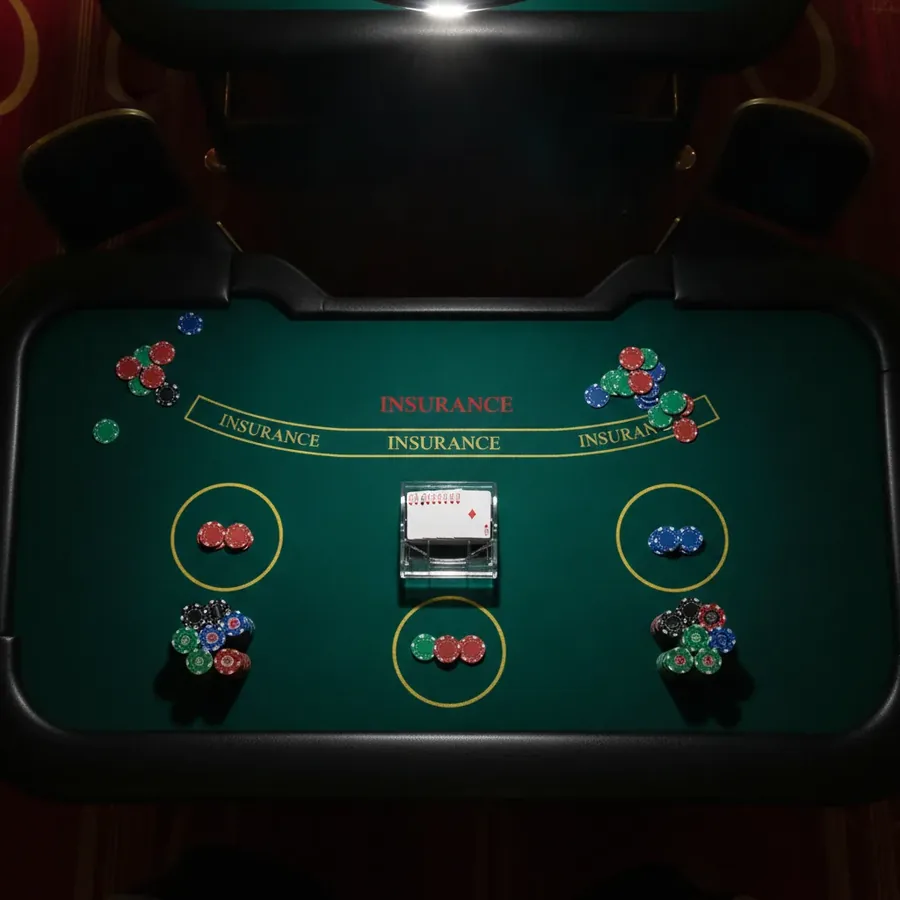
How many decks are in the shoe?
The standard digital blackjack variant utilizes six decks, which influences the theoretical return to player rate to stand at 99.54%. This configuration requires strict adherence to basic strategy to maintain the low house edge of 0.46% effectively against the casino. The use of multiple decks slightly increases the house advantage compared to single-deck games but remains highly favorable for disciplined players.
Continuous Shuffling Machine shuffles after each round
Quantum Blackjack Plus Live employs continuous shuffling mechanisms through Playtech technology, ensuring that every card is randomized immediately after each round. This process maintains a theoretical return to player of 99.57% when optimal strategy is applied to the base game. The rapid reshuffling prevents card counting strategies from gaining an edge, thereby stabilizing the expected loss per hour for all participants.
Step-by-step Split at the Live Table
Players may split pairs into up to four separate hands during Infinite Blackjack, allowing for increased betting opportunities across multiple outcomes. The rule set permits doubling after splitting, which improves the overall return to player by approximately 0.14 percentage points relative to stricter variants. This flexibility enables more aggressive bankroll management strategies during volatile sessions at the live dealer tables.
Register Late Surrender correctly in three steps
Late Surrender allows players to forfeit half their stake after the dealer checks for blackjack, reducing the house edge by 0.08 percent. This rule is available in Liberal Vegas Strip variants where the dealer stands on soft seventeen, providing a crucial safety net for weak hands. By executing this move correctly, players can mitigate losses significantly during unfavorable streaks without waiting for the natural conclusion of the hand.
Blackjack variants at a glance
| Variant | Payout | House edge | Rule | Bet range |
|---|---|---|---|---|
| Blackjack 6 Decks, S17, DAS, DOA, Auszahlung 3:2, Basisstrategie | 99.54% | 0.46% | Dealer steht auf Soft 17; Verdopplung auf jeder Zweierkarte; Verdopplung nach Split erlaubt; keine Aufgabe. Basisstrategie ist für diesen Wert zwingend | Blackjack 3:2, normaler Gewinn 1:1, Insurance 2:1 |
| Blackjack Auszahlung 6:5 statt 3:2 (6 Decks) | 98.15% | 1.85% | Ersatz von 3:2 durch 6:5 fügt exakt +1.39 Prozentpunkte zum Vorteil des Casinos hinzu – stärker als jede andere Regeländerung. Bei $10 Einsatz zahlt Blackjack $12 statt $15. | Blackjack 6:5, Gewinn 1:1 |
| Blackjack Ein Deck, klassische Regeln, 3:2 | 99.85% | 0.15% | Weniger Decks = niedrigerer Vorteil; ein Deck gibt ca. −0.48 Prozentpunkte gegenüber 8 Decks. Oft durch 6:5 Auszahlung kompensiert. | Blackjack 3:2, Gewinn 1:1 |
| Blackjack Liberal Vegas Strip (liberale Regeln, 3:2) | 99.72% | 0.28% | Günstigste Regelkombination: S17 + DAS + Resplit + Late Surrender. Standardabweichung 1,15 | Blackjack 3:2, Gewinn 1:1 |
| Blackjack Split / Double / H17 – Regel-Effekte | n.a. (Regel-Modifikatoren) | H17 +0.22 Prozentpunkte; RSA −0.08 Prozentpunkte; DAS −0.14 Prozentpunkte | Dealer Hits Soft 17 verschlechtert RTP um 0.22 Prozentpunkte; Resplit Aces verbessert um 0.08 Prozentpunkte; Double After Split verbessert um ca. 0.14 Prozentpunkte; 6 Decks statt 8 – ca. 0.02 Prozentpunkte. | Double – Einsatz ×2 mit einer Karte; Split – bis 4 Hände; Ass-Split meist mit einer Karte. |
| Blackjack Insurance / Versicherung (6–8 Decks) | 92.53% | 7.47% | Separate Nebenwette bis 50% der Hauptwette, wenn der Dealer ein Ass hat. Basisstrategie schreibt IMMER Ablehnung vor (außer Karten zählen bei True Count ≥ +3). Bei einem Deck Vorteil ≈ 5.88% | Insurance 2:1 |
How long does a Live Blackjack round take?
The Lightning Blackjack table by Evolution allows bets ranging from 1 EUR to 2,500 EUR and features multipliers up to 25x on winning hands. This provider structure supports unlimited players at the table while maintaining an RTP of 99.56 percent for the base game. The rapid pace of these rounds is driven by the quick resolution of the lightning multipliers which add excitement to each hand. Players should note that the high volatility stems from the random multiplier application rather than standard card dealing speeds.
Infinite Blackjack offered by Evolution accommodates unlimited seats with betting limits set between 1 EUR and 5,000 EUR per round. The game includes four side bets such as Any Pair and 21+3 which operate alongside the main blackjack action. With an RTP of 99.47 percent, this variant offers a slightly lower return than the lightning version due to the additional wagering options. The continuous nature of the infinite table ensures that players rarely wait for a seat, facilitating a faster overall gaming session.
Quantum Blackjack Plus Live by Playtech introduces quantum multipliers up to 1,000x on three-card combinations totaling 21 points. Betting ranges from 1 EUR to 5,000 EUR with an RTP of 99.57 percent when optimal strategy is employed. The special multiplier feature applies specifically to the three-card total, distinguishing it from standard two-card payouts. This unique mechanic requires players to adapt their strategy slightly to maximize the potential impact of the quantum bonuses.
How long do 100 EUR last at a 1 EUR table?
A starting bankroll of 100 EUR at a minimum bet of 1 EUR provides exactly one hundred initial hands before depletion. Standard deviation for liberal Vegas Strip rules is 1.15, indicating moderate variance in short-term results. At a house edge of 0.28 percent, the expected loss per hour is minimal compared to higher edge games. Players relying solely on basic strategy can expect their funds to last longer than those making suboptimal decisions.
Blackjack Liberal Vegas Strip rules offer a house edge of only 0.28 percent with an RTP of 99.72 percent. This combination represents the most favorable rule set available, including S17, DAS, Resplit, and Late Surrender. With a standard deviation of 1.15, the volatility remains manageable for conservative players managing a 100 EUR stake. The low house advantage means that 100 EUR will statistically deplete slower than at tables with higher edges.
Insurance bets pay 2:1 but carry a house edge of 7.47 percent, significantly increasing the cost of play if used incorrectly. Accepting insurance when the true count is below +3 erodes the bankroll rapidly regardless of the base game RTP. For a 1 EUR bettor, avoiding this side bet preserves the 99.72 percent RTP potential of the main game. Proper bankroll management requires strict adherence to basic strategy to prevent unnecessary losses from unfavorable side wagers.
No Double Down on three cards
The absence of double down on three cards removes a valuable strategic option that typically reduces the house edge by approximately 0.14 percent. In variants allowing DAS, players can double after splitting, further improving their expected value over the long term. Without this capability, the player must rely on hitting or standing more frequently, which increases the casino's advantage. This restriction is common in many online blackjack implementations and affects the overall RTP calculation significantly.
Double After Split (DAS) improves the RTP by roughly 0.14 percentage points compared to restrictions on doubling post-split. When combined with other liberal rules like resplitting aces, the house edge drops to 0.28 percent for Vegas Strip games. The inability to double on three cards negates part of this advantage, forcing players into less optimal plays. Understanding these rule limitations is crucial for calculating the true cost of playing at specific tables.
Resplitting Aces improves the RTP by 0.08 percentage points, partially offsetting the loss from other restrictive rules. However, without the ability to double down on multiple cards created by splits, the overall benefit is diminished. Players must adjust their strategy to account for these constraints, often resulting in higher variance outcomes. The cumulative effect of these rule variations determines the final house edge and expected return for the session.
Mobile version needs 1 Mbit bandwidth
Streaming live dealer games such as Quantum Blackjack Plus Live requires a stable connection with at least 1 Mbit bandwidth to function correctly. The video feed from providers like Playtech delivers real-time updates on card deals and quantum multipliers without significant lag. Insufficient bandwidth can cause buffering issues that disrupt the pacing of the game and potentially lead to missed betting opportunities. Maintaining this minimum speed ensures a smooth experience across all supported devices and platforms.
Infinite Blackjack by Evolution streams continuously to accommodate unlimited players, demanding consistent network performance to handle the data load. A connection speed of 1 Mbit is the baseline requirement to prevent video stuttering during critical moments like multiplier activations. Higher bandwidth allows for better resolution settings, enhancing the visual clarity of the dealer and the table layout. Players on mobile networks should ensure their signal strength meets this threshold for uninterrupted gameplay.
Lightning Blackjack features dynamic visual effects for multipliers up to 25x, which require sufficient data throughput to render smoothly. The 1 Mbit minimum bandwidth supports the transmission of these graphical elements alongside the core card dealing stream. Network instability can result in delayed information regarding multiplier hits, impacting the player's ability to react in time. Adhering to the recommended bandwidth specifications helps maintain the integrity of the live gaming experience.
Split, Double Down, and Surrender in Numbers
Surrender rules allow players to forfeit half their bet after the dealer checks for blackjack, reducing the house edge by 0.08 percent. This late surrender option is significantly less valuable than early surrender, which can lower the edge by up to 0.6 percent. The payout for surrender is exactly 50 percent of the original wager, providing a partial recovery of losses. Utilizing this option optimally is essential for minimizing the overall cost of play over extended sessions.
Splitting allows players to divide pairs into two separate hands, with most tables permitting up to four hands from a single pair. Resplitting aces improves the RTP by 0.08 percentage points, offering a slight advantage over non-resplittable variants. The ability to split complex hands increases the strategic depth of the game and can mitigate losses during unfavorable runs. Players should master the timing of splits to maximize the potential of this rule modification.
Double Down on two cards enables players to double their initial wager, potentially doubling their profit on strong starting hands. While some variants allow doubling on any number of cards, the standard rule restricts this to two cards for balance. The decision to double depends heavily on the dealer's upcard and the player's total, requiring strict adherence to basic strategy. Correct application of this rule contributes to achieving the lowest possible house edge of 0.28 percent.
RNG draws cards from virtual eight-deck shoe
The RNG algorithm utilizes a virtual eight-deck shoe to determine card distribution for standard blackjack sessions. This specific configuration establishes a baseline house edge of 0.46 percent when players adhere strictly to the optimal basic strategy chart during gameplay. Consequently, the theoretical return to player percentage remains fixed at 99.54 percent over extended playing periods.
Contrast this with the single-deck variant which offers a lower house edge of 0.15 percent and an RTP of 99.85 percent. The eight-deck format increases the house advantage by approximately 0.31 percentage points compared to the single-deck option due to reduced strategic precision. Players must account for this slight mathematical disadvantage when selecting their preferred table limits and betting patterns.
Insurance bets in this multi-deck environment carry a severe house edge of 7.47 percent and an RTP of only 92.53 percent. Basic strategy dictates always rejecting insurance unless counting cards reveals a true count greater than or equal to three positive integers. Accepting this side bet significantly erodes long-term profitability and should be avoided by disciplined blackjack strategists.
Error insurance: 7 percent additional house edge
Insurance represents a separate side wager available when the dealer shows an ace, allowing players to bet up to fifty percent of the original stake. This specific bet carries a steep house edge of 7.47 percent, resulting in a poor RTP of 92.53 percent for the participant. The payout ratio for winning insurance bets is set at two to one, which does not offset the high statistical cost.
Comparing this to the main game RTP of 99.54 percent reveals that insurance reduces overall expected value by nearly seven percentage points. The house edge of 7.47 percent stands in stark contrast to the negligible margins found in well-regulated primary blackjack rounds. Accepting this wager introduces significant variance and guarantees negative returns for any player employing standard tactical approaches.
Professional analysis confirms that rejecting insurance is mandatory for maintaining optimal bankroll management across all standard blackjack variations. The term house edge defines the average percentage of each wager retained by the casino over hundreds of thousands of hands played. Relying on insurance creates a mathematical trap that drains funds faster than standard play under identical betting conditions.
Ignored Basic Strategy Chart: 1 Percent Wasted
Adhering to the basic strategy chart is mandatory to achieve the stated RTP of 99.54 percent on six-deck tables with soft seventeen rules. Deviating from these mathematically proven moves can increase the house edge by approximately one percentage point or more depending on error frequency. Strategic discipline directly correlates with minimizing losses and preserving capital during extended gaming sessions at the virtual table.
The difference between optimal play yielding a 0.46 percent house edge and suboptimal play resulting in higher costs exceeds one full percent per hand. This margin represents lost value that accumulates rapidly as volume increases, effectively wasting potential winnings through avoidable tactical mistakes. Players ignoring the chart forfeit the mathematical advantage designed into the game rules for informed participants.
Resplitting aces improves the RTP by 0.08 percent while doubling after split enhances it by 0.14 percent according to detailed rule modifiers. Hitting on soft seventeen adds 0.22 percent to the house edge, demonstrating how minor rule changes impact overall profitability significantly. Understanding these specific adjustments allows players to calculate exact expected losses based on their chosen betting strategies.
Highroller from 500 EUR per hand
Quantum Blackjack Plus Live accommodates high rollers with maximum betting limits reaching five thousand euros per individual hand placed at the table. This substantial upper limit allows experienced players to deploy large stakes while accessing quantum multipliers that reach up to one thousand times the win amount. The platform supports unlimited seats ensuring high-volume action without delays or restrictions for elite participants.
Infinite Blackjack offers slightly lower maximum stakes at five thousand euros but provides four distinct side bets including Any Pair and Bust It options. These side wagers introduce additional volatility and house edges that differ significantly from the main game RTP of 99.47 percent. High stakes combined with side bets create complex risk profiles requiring precise bankroll allocation and advanced statistical understanding.
Lightning Blackjack features a lower maximum stake of two thousand five hundred euros but includes lightning multipliers up to twenty-five times for winning hands. This structure appeals to players seeking explosive payout potential rather than steady high-limit progression typical of traditional live dealer formats. The unique multiplier mechanics alter standard probability calculations and require adjusted expectations regarding average returns per session.
Statistics display saves the last 100 rounds
The statistics module records the outcomes of the previous one hundred rounds to provide immediate historical context for current betting decisions. This feature allows players to track recent trends in wins, losses, and specific card distributions without relying on external tracking tools. Access to this data supports more informed wagering choices within the constraints of the game's random number generation.
Game contribution percentages indicate that table games contribute only ten percent toward bonus wagering requirements compared to slots contributing one hundred percent. This disparity means that betting five hundred euros per hand generates minimal progress toward unlocking the three hundred percent welcome bonus up to two thousand euros. Players must balance entertainment value against the slow accumulation of required turnover volumes.
Standard deviation figures for liberal variants like Vegas Strip sit at 1.15, indicating moderate volatility compared to other blackjack configurations. Tracking one hundred rounds helps visualize how variance impacts short-term results versus the long-run RTP of 99.54 percent. Consistent monitoring enables better assessment of whether observed results align with theoretical expectations over time.
Contact
Live - online chat
Banking









Providers












Slotexo Casino 2026